WHY STUDY IN JAPAN?
Studying in Japan is a great choice for many reasons. Some students are drawn to Japan because of its excellent standards of education, while other students are drawn by the country’s rich traditions. Every year, around 5 million students study abroad, and that number is expected to rise. Japan is one of the most popular locations for foreign students, with over 150,000 students studying there.
- Excellent Educational Standards
Japanese high school students are ranked first in the world for arithmetic and second for scientific knowledge by the OECD. Since 2000, Japan has had the second-highest number of Nobel laureates of any nation, and the most of any Asian nation. In Japan, 49% of high school graduates enroll in college. Ten of the more than 700 universities in Japan are among the top 200 in the world.
- Healthcare and Safety
Japan is among the world’s safest nations. Acts of violence is rare, with Japan placing lowest in the number of victims of crime per capita. Japan frequently appears on rankings of the world’s safest travel destinations. Japan’s long life expectancy is a result of having one of the most developed healthcare systems in the world. A visit to the dentist or doctor typically takes only a few hundred yen (a few dollars), with members of the National Health Insurance plan covering only 30% of their medical expenses.
- Improve Your Employability
A study abroad experience looks excellent on a resume. The talents you acquire as an international student are valued by employers. Employers are eager to hire individuals who are aware of global issues, and many actively seek out students who have studied abroad, particularly if they speak a second language. Approximately half of the big Japanese corporations asked in a recent survey said they would like to hire international graduates from Japanese universities.
- See The World
You have a once-in-a-lifetime chance to live, work, and experience another culture while you study abroad. You will get the opportunity to gain knowledge about one of the most distinctive cultures on the planet’s people, customs, history, and language. Living abroad will enable you to grow as a person and learn self-reliance and responsibility. It will enable you to view things from fresh angles and recognize the profound cultural differences as well as human similarities.
- Reasonable Study Cost
Tuition at Japanese universities is typically reasonably priced. Some even provide comparable cost plans for students studying domestically and abroad. JASSO and MEXT scholarships are also provided by the Japanese government, and most universities give merit-based 25%/50%/75%/100% remission. There are also a lot of private scholarships accessible. During the semester, students from abroad are permitted to work up to 28 hours per week (part-time); during the breaks, this is increased to 40 hours per week.
Top Ranking Universities in Japan
Some of the top universities in Japan include the following (ranked as per the 2023 QS World Rankings):
| Name of the Institution | QS World Rankings (2024) |
| The University of Tokyo | 28 |
| Kyoto University | 46 |
| Tokyo Institute of Technology | 91 |
| Osaka University | 80 |
| Tohoku University | 113 |
| Nagoya University | 176 |
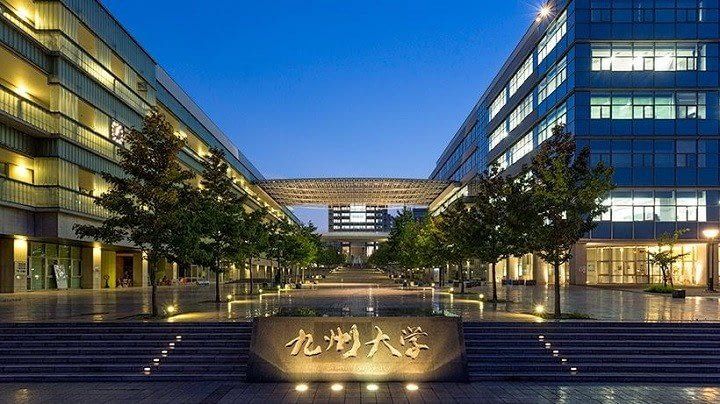
| Kyushu University | 164 |
| Hokkaido University | 196 |
| Keio University | 214 |
| Waseda University | 199 |
Living Expenses
The following categories best describe the cost of living in Japan:
- Housing & lodging expenses: For single rooms, this can run up to 12,000 Yen a month. Rentals off-campus could run you about 6,000 Yen a month.
- Food: The price range for this is 800-1,000 Yen.
- Travel: The monthly cost of this might be around 10,000 Yen.
- Utilities- Students should expect spending close to 10-18,000 Yen each month.
Best Cities for Residence and Education
Among the best cities in Japan for international students are the following:
Hiroshima: Along with Hiroshima University and other institutions, this city also hosts a sizable number of overseas students. This place has a well-developed transit system, which includes trams.
Yokohama is a city in the Kanagawa Prefecture that is home to thousands of foreign students. Numerous academic institutions are in the nearby areas, such as Keio University, Nihon University, Sophia University, and Tokai University.
Kobe: This city is home to many international students and has stunning landscapes. Kobe University and the Japan University of Economics are located there.
Kyoto: This city is home to prestigious universities such Ritsumeikan University, Kyoto University, and Kyoto College of Graduate Studies for Informatics, as well as a large number of overseas students.
Nagoya: Home to prestigious academic institutions like Tokyo University and Nagoya University, this city is also a magnet for international students.
Osaka: Ritsumeikan University, Kansai University, Keio University, and other universities are among the thousands of international students that call Osaka home.
Tokyo: It is undoubtedly one of the best cities in the world for international students to study because it has many popular tourist attractions in addition to prestigious universities.